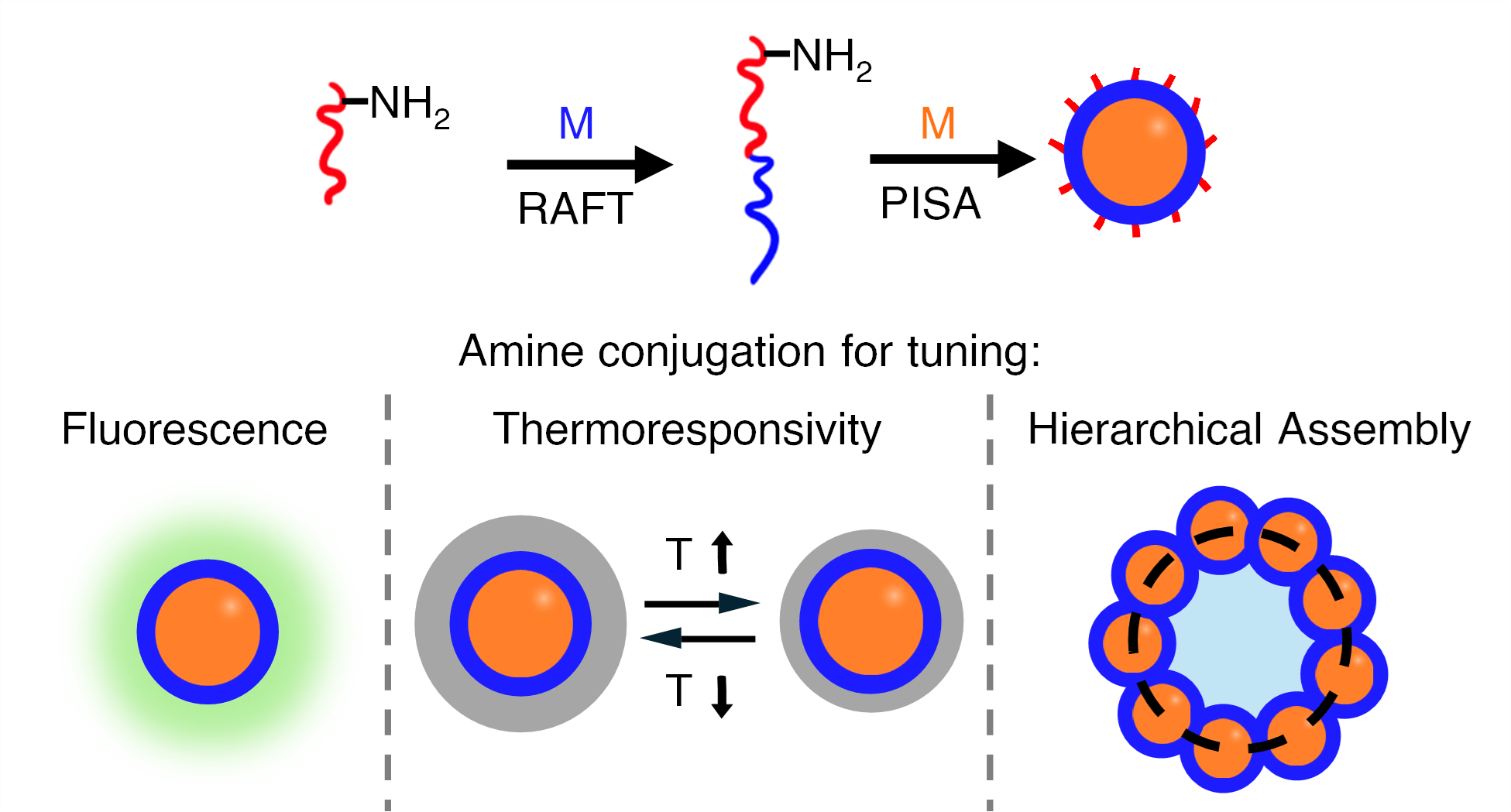
Polymeric nanoparticles are powerful tools for nanomedicine and functional materials, but controlling their surface chemistry with precision remains a major challenge. In this work, we developed amine-functionalized polymer nanoparticles through aqueous polymerization-induced self-assembly (PISA), creating stable and highly versatile nanostructures with tunable interfacial reactivity. By quantitatively controlling accessible surface amines, the nanoparticles could be efficiently modified with fluorescent dyes or thermoresponsive polymers and further assembled into hierarchical colloidosomes. The study highlights how precise molecular engineering at the nanoscale can be translated into predictable macroscopic functionality, opening new opportunities in drug delivery, diagnostics, and nanoreactor design.
Quantifying and Leveraging Interfacial Amine Reactivity in Block Copolymer Nanoparticles for Advanced Material Design