
Going Deep into the Surface Chemistry of Carbon Dots: Influence of Functional Groups on the Redox Abilities
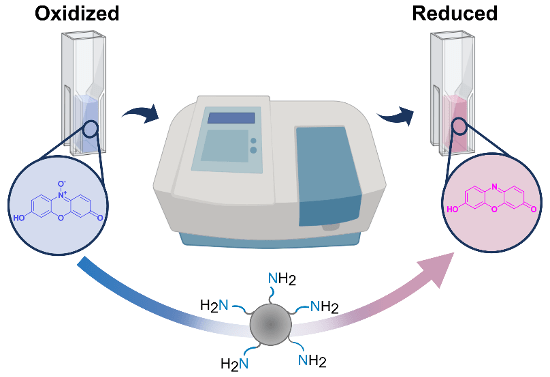
Carbon dots are tiny, fluorescent nanoparticles synthesised from cheap, readily available precursors, but for all their promise in catalysis, sensing, and chemical biology, one question has lingered: what actually makes them good at transferring electrons? This study digs into the surface chemistry of carbon dots to show that amine groups — their number, their density, and how accessible they are — are the decisive factor, and that understanding them quantitatively is the key to designing better nanomaterials.

Molecular Insights into the Formation and Functionalization of Carbon Nanodots: From Precursor Intermediates to Surface Chemistry Quantification

Our research team has achieved a milestone in the molecular characterization of carbon nanodots (CNDs), revealing their absolute molecular weight for the first time, and precise surface functionality. Published in Angewandte Chemie International Edition and developed in collaboration with the group of Prof. Maurizio Prato (University of Trieste) and Dr. Serena Agostini from Malvern Panalytical Ltd (UK), this work establishes a solid framework for precise nanodot characterization, opening the way to tailored applications in catalysis, nanomedicine, and advanced hybrid material fabrication.