

Life is an expression of molecular chemistry. We know that living cells are the building blocks of life. We also know that living cells are an assembly of (macro)molecules that are continuously reacting and interacting with each other. However, we also know that molecules are not alive and that a chemical reaction is not alive. So why is it that cells are alive?
With this intriguing scientific question in mind, our research aims to try to fill this knowledge gap between biology and chemistry to better understand how the non-living becomes alive.
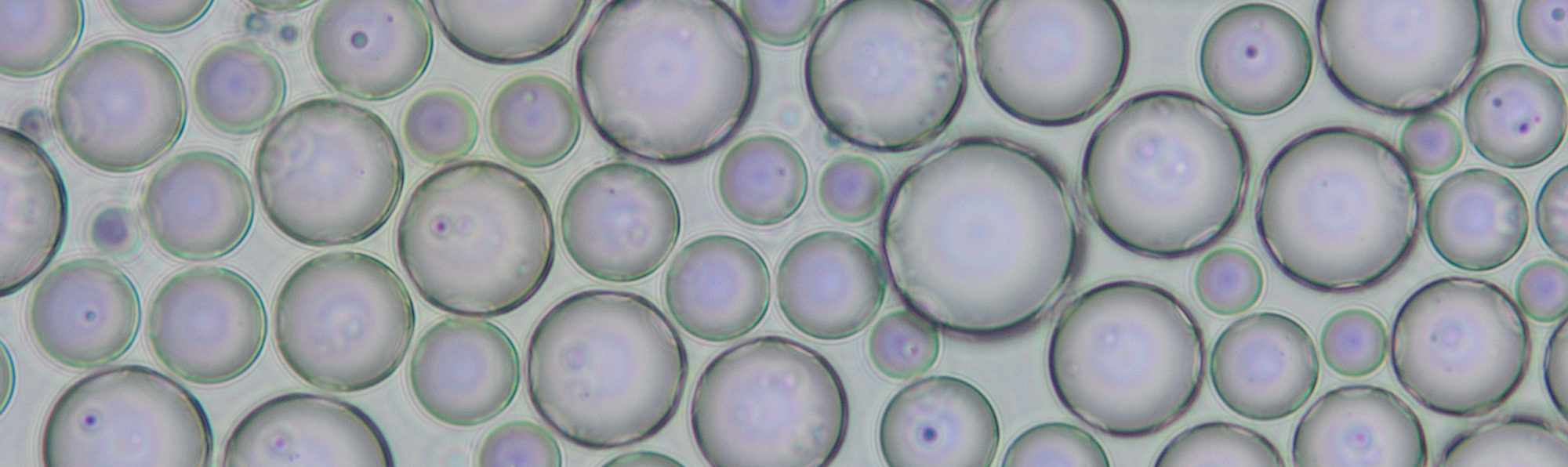
To do this, we construct synthetic cells or protocells from the bottom up. Protocells are microcapsules built from scratch using inanimate molecules and materials, and are chemically programmed to mimic at least one basic property of living cells (e.g., the ability to send and receive chemical signals, contain chemical information, perform catalysis, generate self-assembled structures etc.). Most importantly, protocells do not have to strictly mimic living cells and there are no restrictions on the type of materials, methods and chemical reactions that can be used to build them. As such, we believe that the fields of organic chemistry and functional molecules and materials can provide invaluable opportunities in protocell engineering.
To read more about our research on protocells:
https://chemistry-europe.onlinelibrary.wiley.com/doi/epdf/10.1002/ejoc.202300529
https://chemistry-europe.onlinelibrary.wiley.com/doi/epdf/10.1002/ejoc.202200968
https://www.frontiersin.org/articles/10.3389/fmolb.2021.804717/full
https://gobbo-group.com/wp-content/uploads/2022/07/lalba-dei-materiali-protocellulari.pdf (in Italian)
Our research projects:
PROTOMAT (European, ERC Starting Grant 2021)
PLANKT-ON (European, EIC Pathfinder Open)
3D-L-INKED (National, PRIN-PNRR)
SAMBA (National, PRIN)
PROTO-BACT (European, Marie Curie Postdoctoral Fellowship)
SAPTiMeC (European, Marie Curie Postdoctoral Fellowship)

 The Gobbo Group